

METHODS
In this cost-of-illness study, per-patient annual direct and indirect medical costs for the management of
breast cancer (in newly diagnosed and former patients and in metastatic and non-metastatic disease)
were determined based on epidemiological, clinical, and lost productivity inputs provided by a Delphi
panel consisting of oncology, general surgery, and pathology experts.
RESULTS
The mean annual cost per patient for newly diagnosed breast cancer was $21,595.62 for metastatic patients
and $4,490.76 for non-metastatic patients. The total annual direct cost of new and former patients was
$222,514,612.10. Non-medical costs included transportation, caregiving, and the need for palliative care.
The non-medical direct cost for new patients and follow-up patients was $18,917,841.62 and $2,195,169.61,
respectively. The total non-medical direct cost of newly and previously diagnosed patients with breast cancer
was $21,113,011.23. While the indirect costs for the newly diagnosed patients amounted to $815,199,359.02,
the indirect cost for the previously diagnosed breast cancer patients was $169,767,030.43. The total indirect
cost was $982,867,753.58. The economic burden of breast cancer was $1,230,416,060.71 in Türkiye.
CONCLUSION
This cost-of-illness study indicates that breast cancer poses a significant economic burden for Türkiye. A
large share of indirect costs in total costs can provide important guidance to decision-makers in the healthcare
system to better allocate limited resources to breast cancer prevention and early detection strategies.
Keywords: Breast cancer; direct cost; economic burden; indirect cost
The incidence of breast cancer in the world has
increased in the last 25 years. Certain factors are considered
to play a role in this rising incidence, such as
developments in technologies that provide high-quality
screening and diagnosis of breast cancer, lifestyle
characteristics (i.e., alcohol consumption, obesity, lack
of physical activity), prolonged hormone replacement
therapies (HRT), prolonged life expectancy, and thus
prolonged menopause periods.[
With the introduction of innovative cancer drugs to
patients in Türkiye, it is observed that life expectancy
is prolonged and quality of life is improved. However,
the cost of breast cancer is not within our knowledge.
Therefore, this study aimed to determine the economic
burden of breast cancer.
The total economic burden of breast cancer was calculated based on per-patient costs. The data were analyzed in Microsoft Excel® 2020. Intangible costs were excluded from the study.
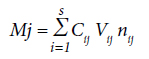
The method developed on behalf of the World Bank
(WB) and World Health Organization (WHO) was
used for direct disease costs calculations.[
a. Unit cost of health services required to deliver the
intervention (C)
b. Quantity of each type of service required for the intervention
(V)
c. Number of people applying to the health institution
for that service (n)
In the above equation, "i" denotes the service levels,
and "j" denotes the services needed for the intervention.
The equation assumes that there are s types of appropriate
services. If some of the services are not needed in the
production of intervention j, the values of V will be zero.
Direct Medical Cost
Outpatient Follow-up Cost Item
Outpatient clinic visits were considered to vary according
to metastasis status, and the patients with metastatic
disease were estimated to be more likely to receive
outpatient services. The distribution of outpatient clinic
visits is presented in Table
Laboratory/Imaging Tests Cost Item
Laboratory tests/imaging tests included biopsy, and
rates were considered to differ in metastatic and
non-metastatic patients (Table
Hospitalization/Intervention Cost Item
In the Delphi panel, two approaches for tumour surgery
were foreseen. Lumpectomy for 65% of Stage
1 patients and 40% of Stage 2 patients, mastectomy
and reconstruction surgery for 35% of Stage 1 patients
and 35% of Stage 2 patients. Non-metastatic
patients are considered to be hospitalized for 3 days
in general surgery, 1 day in the general surgery intensive
care unit, and then 3 days in the ward. Breast
reconstruction is delayed in 10% of patients, sentinel
lymph node removal is performed in 100% of patients,
biopsy in 75%, and lymph dissection in 20% of
patients. In locally advanced breast cancer patients,
breast-conserving surgery is performed in 10%, radical
mastectomy in 90%, and breast reconstruction in
40%. In metastatic breast cancer patients (55% postmenopausal
and 45% premenopausal), the interventions included radical mastectomy (15%), sentinel
lymph node biopsy (5%), axillary dissection (15%),
and hospitalization. In light of this information, the
average annual hospitalization/intervention cost was
estimated to be $1,285.42 in non-metastatic patients
and $1,112.25 in metastatic patients.
Treatment Cost Item
Neoadjuvant chemotherapy is given to 35% of non-metastatic
patients. All brands under the active ingredients
of the relevant chemotherapies were calculated appropriately
according to their posology and included in
the publicly paid costs. The side effects of each active
substance were calculated based on the cost-of-illness
methodology. Accordingly, 80% Adriamycin, 80% Paclitaxel,
20% Pertuzumab, and 80% Trastuzumab, 13%
Carboplatin, 80% Cyclophosphamide, 30% Docetaxel,
and 8% Doxorubicin and Cyclophosphamide are included
in the treatment of patients over four cycles.
Adjuvant trastuzumab treatment in non-metastatic
breast cancer and neoadjuvant trastuzumab treatment
and related side effects are included (Table
Details of drug treatments in locally advanced
and metastatic patients are presented in Table
Accordingly, the total drug/side effects cost was
determined to be $2,687.84 per patient per year for
non-metastatic breast cancer patients and $17,067.32
per patient per year for metastatic breast cancer patients
(Table
Non-Drug Treatments
Patients with locally advanced breast cancer may need
radiotherapy after chemotherapy. Adjuvant radiotherapy
(RT) after mastectomy is between 45 and 50 Gray.
One percent of patients have to undergo lymphoedema
treatment and lymphatic bypass, 1% vascularized lymph
node transfer, 1% flap surgery, 1% lymph suction, and
1% excisional surgery. Flap necrosis is treated in 5%, infection
in 5%, and seroma in 4% of breast reconstruction
patients. Treatment of brain metastasis in 15% of patients, lung/liver metastasis in 25%, and bone metastasis
in 70% of patients are included in the calculations.
In patients with bone metastasis, 75% were treated for
clinically severe pain, 10% for pathological fracture, 2%
for spinal cord compression, 3% for bone marrow failure,
and 5% for severe hypercalcemia. In addition, 14.3%
of the patients relapsed and received breast-conserving
surgery and radiotherapy, 24% received breast-conserving
surgery and tamoxifen, and 9.7% received
breast-conserving surgery, tamoxifen, and radiotherapy.
According to these data, the total intervention cost for metastatic locally advanced-stage patients is $1,112.24, the metastasis cost is $2,006.83, the recurrent patient cost is $116.30, and the complication cost is $162. The best supportive treatment cost (BSC) of the patients for the last month is $567.88.
Monitoring Costs
Stage I-IIA patients who have been diagnosed with
breast cancer but have been on follow-up for the last 5
years are expected to have received medical oncology
outpatient clinic visits four times a year, routine laboratory
tests four times a year, breast USG two times a
year, and mammography once a year, while the average
annual cost per patient is $25.45. Stage IIA-IIIB-IIIC
patients need oncology visits four times a year, routine
laboratory tests four times a year, 20% CT, 10% bone scintigraphy, 20% thorax CT, 10% systemic CT, 10%
mammography, and the average annual cost per patient
is $30.06. For Stage IIIC-IV patients, the average annual
cost per patient is $17.99 with the need for four visits
to medical oncology and one systemic CT per year. In
the study, follow-up patients were accepted as prevalence
patients and were determined as 83,973 people.
Total Direct Cost
The metastatic breast cancer patient rate of 25% and
the non-metastatic patient rate of 75% were taken
from the Ministry of Health Cancer Diagnosis, Prevention,
Screening, and Treatment Guidelines. The
average annual cost per new metastatic breast cancer
patient diagnosed in the last year was $21,595.62, and
the average annual cost per non-metastatic patient was
$4,490.76 (Table
For metastatic and non-metastatic weighted direct cost calculations, the total direct breast cancer disease cost is $22,251,461.20, taking into account the number of new/incidental patients and the number of previously diagnosed prevalent patients. The total direct disease cost of the new patient is $1,822,047.94.
Direct Non-Medical Costs
Direct non-medical costs were identified by the Delphi
panel as transport, home care, and palliative care. The
rate of those in need of professional care and palliative
care was accepted as 25% and 10%, respectively. According
to the Healthcare Implementation Communique
(HIC), the daily palliative care fee is $5.58, and the home
care fee is $227.49 per month. The daily wage for labor
loss was taken over the 2023 minimum wage ($446.32)
and calculated as $9.88 per day. Forty percent of patients receive treatment from outside the city, and 60% from
within the city. It was estimated by the Delphi panel that
32% of the patients traveled by taxi, 32% by private car,
and 36% by public transport. For public transport, the
Istanbul Municipality bus ticket fare was accepted as
$1 for a round trip and $22.03 for out of Istanbul. For
private vehicles, the calculation was made based on the
fuel consumption per 100 km as well as the weight of the
best-selling cars in Türkiye in 2016. The fuel consumption
types of the vehicles were weighted, and the average
fuel prices for Istanbul were taken. The average distance
to the centre of Istanbul is calculated as 8.1 km, and the
average distance of the closest cities to Istanbul is calculated
as 141.8 km. Transport by private car and taxi was
calculated separately for the number of patients traveling
to and from the hospital, as well as for the number of incidental
and prevalent patients, based on these distances
and fuel costs. The direct non-medical cost for the new
patient is $18,917,841.62, and the direct non-medical
cost for the follow-up patient is $2,195,169.61 (Table
Indirect Costs
Indirect costs represent the costs of loss of labor force, early
retirement, and early death. The average age of patients
is 53 years, and the retirement age is 54 years in Türkiye.
As a result of the Delphi panel, it was determined that 30%
of the patients were active employees, and non-metastatic
patients were on sick leave for approximately 6 months
and metastatic patients for 1 year. Premature mortality
was 10%, and the years of life lost calculated according to
the life expectancy were found to be 23 years. The daily
wage of labor loss calculated based on the 2023 minimum
wage ($446.32) was $9.88 per day. The average disability
pension is $367.26 and is considered 5 years. The labor
loss for the days spent in the hospital and for the days
of sick leave was calculated over the daily amount of the minimum wage. Indirect costs are calculated separately
for new and follow-up patients, and it is seen that new
patients face a higher cost due to their first diagnosis and
treatment in the hospital. Accordingly, while the indirect
costs for new patients were $815,199,359.02, they were
$169,767,030.43 for follow-up patients (Table
Total Burden Of Disease
The 5-year prevalence of breast cancer patients in Türkiye
according to GLOBOCAN data (2020) is 83,973.
The number of new patients is 25,381, and the number
of deaths is 7,161. The premenopausal patient rate
is 45%, and the postmenopausal patient rate is 55%.
According to molecular subtypes, HER2 is 12%, Luminal
A 50%, Luminal B 30%, and TNBC 8%. In the
direct cost calculations made in light of all these data,
the new patient annual direct cost was calculated as
$222,514,612.06, and indirect cost as $834,117,200.66,
amounting to a total of $1,056,631,812.73. The total
annual direct cost for the formerly diagnosed
patients was $1,822,047.94, and indirect costs were
$171,962,200, amounting to a total of $173,784,247.98
annually. The total direct and indirect cost of new and
formerly diagnosed patients is $1,230,416,060.71 (1$
= 19.03 TL-Turkish Liras) (Table
In our study, indirect costs in breast cancer patients
were 75% of the total cost. Direct costs in both metastatic
and non-metastatic patients are covered from the perspective
of reimbursement due to the country's health
policies. Another important reason for the high indirect
costs is that all patients are assumed to be working. Since
it is a disease with very high social costs, especially for
female patients, indirect costs were calculated for each
patient. Türkiye has a population of approximately 86.5 million people, half of which is female, in a large geographical
area. Of course, every woman has different
access to health services. As in every country, there are
differences in health services between developed regions
and rural areas of Türkiye. Differences in culture
and awareness among geographies also affect people's
demand for health services. There are differences in patients"
use of preventive medicine services or awareness
of the importance of applying to a health institution.
Referral of patients to more developed provinces may
sometimes cause delays in diagnosis. All these possibilities
are reflected in costs. Economic burden studies to be
conducted on a regional basis may reveal these differences.
In a breast cancer cost study conducted in Sweden
in 2002 with the same methodology, indirect costs accounted
for 70% (2.1 billion SEK) and direct costs accounted
for 30% (895 million SEK) of the total cost, supporting
our results. The total cost was SEK 3 billion, with
indirect costs tripling the direct costs due to premature
deaths and labor loss. The detection of more cancer cases
under the age of 65 due to new technologies, early retirement, days off work due to illness, and premature death
all contributed to the cost of lost production.[
The most important reason why costs in Türkiye
seem lower than in Europe is that a single reimbursement
agency undertakes the health expenses of the entire population.
In Türkiye, citizens are covered by general health
insurance, and the reimbursement agency makes payments
to healthcare facilities based on a low-margin price
list to ensure smooth public access to healthcare services.
There are many similar studies in the literature worldwide.
Breast cancer is the most common cancer in women,
and it has become a disease whose direct cost has
increased over the years with the results of being in the
screening program in many countries and the patient's
survival for many years with newly developed drugs.
That's why the indirect cost of breast cancer has gradually
become smaller. When new drugs enter breast cancer
treatment algorithms, the overall survival of the patient is
longer than in previous years, leading to increased costs.
Authorship contributions: Concept - S.M., M.B.A., N.A., A.B., U.D., Ç.G., B.K., N.K., B.Ö., M.A.Ş., Ç.Ş., Ö.E.; Design - S.M., M.B.A., N.A., A.B., U.D., Ç.G., B.K., N.K., B.Ö., M.A.Ş., Ç.Ş., Ö.E.; Supervision - S.M., M.B.A., N.A., A.B., U.D., Ç.G., B.K., N.K., B.Ö., M.A.Ş., Ç.Ş., Ö.E.; Data collection and/or processing - S.M.; Data analysis and/or interpretation - S.M., M.B.A., N.A., A.B., U.D., Ç.G., B.K., N.K., B.Ö., M.A.Ş.; Literature search - S.M.; Writing - S.M., M.B.A., N.A., A.B., U.D., Ç.G., B.K., N.K., B.Ö., M.A.Ş.; Critical review - S.M., M.B.A., N.A., A.B., U.D., Ç.G., B.K., N.K., B.Ö., M.A.Ş., Ç.Ş., Ö.E.
Conflict of Interest: All authors declared no conflict of interest.
Use of AI for Writing Assistance: No AI technologies utilized.
Financial Support: None declared.
Peer-review: Externally peer-reviewed.