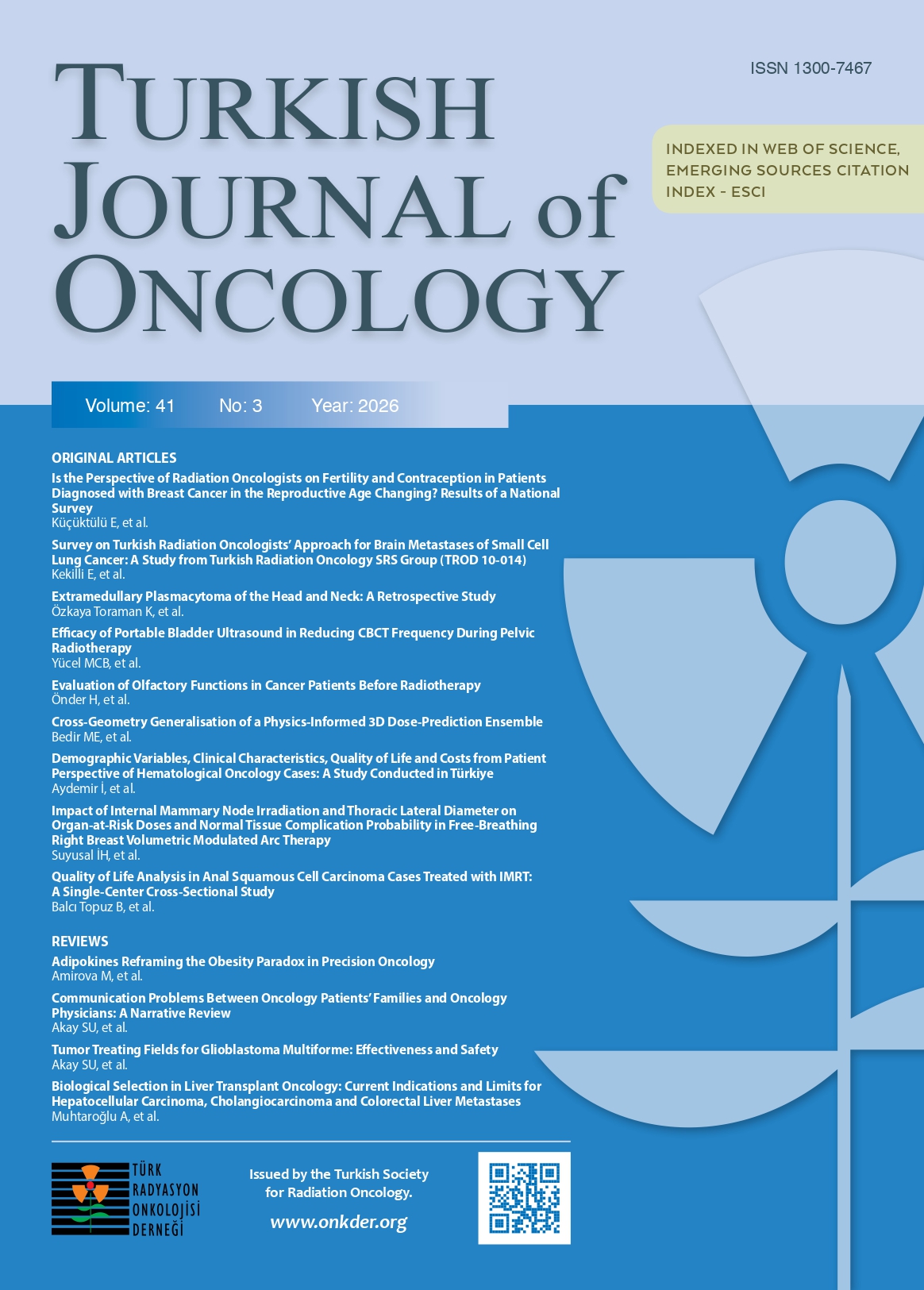
KÜÇÜKTÜLÜ E, TİLKİ B, KARABULUT GÜL Ş. Is the Perspective of Radiation Oncologists on Fertility and Contraception in Patients Diagnosed with Breast Cancer in the Reproductive Age Changing? Results of a National Survey. Turk J Oncol. 2026 ;41(3):165-171. doi: 10.14744/hf.2026.4871.
KÜÇÜKTÜLÜ E, TİLKİ B, KARABULUT GÜL Ş. Is the Perspective of Radiation Oncologists on Fertility and Contraception in Patients Diagnosed with Breast Cancer in the Reproductive Age Changing? Results of a National Survey. Turk J Oncol. 2026;41(3):165-171. doi: 10.14744/hf.2026.4871
KÜÇÜKTÜLÜ, E., TİLKİ, B., & KARABULUT GÜL, Ş. (2026). Is the Perspective of Radiation Oncologists on Fertility and Contraception in Patients Diagnosed with Breast Cancer in the Reproductive Age Changing? Results of a National Survey. Turkish Journal of Oncology, 41(3), 165-171. https://doi.org/10.14744/hf.2026.4871
KÜÇÜKTÜLÜ, E., et al. "Is the Perspective of Radiation Oncologists on Fertility and Contraception in Patients Diagnosed with Breast Cancer in the Reproductive Age Changing? Results of a National Survey." Turkish Journal of Oncology, vol. 41, no. 3, 2026, pp. 165-171. https://doi.org/10.14744/hf.2026.4871.
KÜÇÜKTÜLÜ, E., B. TİLKİ, Ş. KARABULUT GÜL. 2026. "Is the Perspective of Radiation Oncologists on Fertility and Contraception in Patients Diagnosed with Breast Cancer in the Reproductive Age Changing? Results of a National Survey." Turkish Journal of Oncology 41, no. 3: 165-171. https://doi.org/10.14744/hf.2026.4871.


 , Burak TİLKİ1